


In the last ten years, a cultural revival movement has taken hold in the Western Jewish world—the revival and empowerment of Sephardi and Mizrahi culture and tradition—which has inspired numerous non-profits, organizations, exhibitions, books, documentaries, social media personalities, and everything in between.
The timing, certainly, is not a coincidence. 2016 was the year that fired off today’s culture wars, the proliferation of identity essentialism and politicking, the oppressor/oppressed binary mentality that had Western institutions in a chokehold, and other iterations of “Us vs. Them.” Jews were suddenly thrust into an uncomfortable spotlight. Where did we stand in the ever-changing climate that determined your privilege, credibility, and right to freedom of expression based on your ethnic origin, or the color of your skin?
In societies like the United States, where the majority of the Jewish population is Ashkenazi, many Jews can pass as “white”, despite not being perceived or dealt with as such for the majority of global history. The Martinican writer Aimé Césaire, in his Discourse on Colonialism (1950), accepted that Jews had been racialized into a type of non-European, non-white subject. He would later go on to found the Négritude movement, a precursor to the critical race theory that has become pervasive in our academic institutions. Following Israeli victories in the Six-Day War, American Jews would be increasingly demonized as enablers of colonial expansion, sponsors of capitalist imperialism, and therefore “white” in all but name.
For American Jews who became swept up in the #MeToo movement, Black Lives Matter, the identity politics of the mid-2010’s, something strange began to happen. To be specific, many Jews in the U.S. began to see themselves through the lens of American history and colorism, desperately trying to decide where they fit, the only boxes available to them: brown, black, or white. To refuse to fit into any of these boxes—no matter our 4000 years of history and incredible ethnic diversity—was perceived by the masses as arrogant, foolish, privileged, even racist. American Jewish institutions latched on with blind militancy. To be progressive, as they defined themselves, meant to follow the current progressive movements of today.
Those movements demanded submission. Black, brown, or white—which one were you? The ADL published educational materials and glossaries defining white privilege as a systematic advantage experienced by white individuals in societies organized by racial inequality, such as the United States. It introduced anti-bias and DEI programs into its curriculum and administrative structure. Well-known Jewish magazines began to list in their submissions section that they are eager to read submissions from writers of color. Others began publishing appalling pieces on Mizrahi Jewry, on so-called “Jews of Color” (in 2020, one well-known publication published an article titled “Ashkenormativity is a Threat to All Jewish Communities”). Most of these publications were run by Ashkenazi Jews themselves, but no matter. By 2020, racial self-flagellation and masochism were considered the responsible things to partake in. The Mizrahi Jew became the mascot of Ashkenazi anti-racism, our only apparent function to be paraded before the left as evidence of millennia of DEI compliance.
Mizrahi and Sephardi organizations that had existed for decades began to be invited into mainstream Jewish institutions and gained a different kind of relevance altogether, fueling conversations about who gets counted as “Jews of Color,” and how Mizrahim fit (or don’t fit) into American racial frameworks. Popular manifestos began to be published on who is the “right” or “wrong” kind of Jew in this evil, Ashkenormative world that supposedly erases Mizrahi Jews. New and curious categories of “Mizrahi” Jews began to emerge, including figures who, on closer inspection, were not Jewish at all. The campaign against imperial whiteness, the effort to reframe Jewish–Arab relations as an ideological counterweight to pro-Palestinian social justice politics, and the defense of Zionism itself came to hinge on the recovery of Jewish “brownness”—a project in which Mizrahi Jews became largely unwitting, and frequently unwilling, symbols. To be more specific, the majority of Mizrahi Jews in Israel had no fucking clue that their identity was being repackaged by American DEI vultures. A monster began to grow: growling, drooling, and slumbering in the shadows.
October 7th and After
And then the monster awakened. No need to describe in detail the horror of October 7th. We all know what happened that day, and we know what happened after—the celebrations, the institutional statements of support, the calls for more violence. Progressive Jews were beside themselves. “Hadn’t we marched with you in your time of need?” they cried out. “Weren’t we also your faithful allies?”, they screamed into the void of the internet, as various progressive causes abandoned them to support the perpetrators of the massacre. (Spoiler alert: they were never “allies” to begin with).
Their cries fell on deaf ears. No matter the amount of Jewish families slaughtered, women raped, or hostages taken—the Palestinians were the “brown” victims, and the Jews were the “white” oppressors. The Palestinians were simply resisting white supremacy. October 7th, then, was justified, because it was an act of resistance against white oppression, colonialism. They were Jesus, the brown Palestinian—the pure one, the son of God—crucified by white Judas.
And so Jews, of all colors, began to try to find a life raft in the raging storm of mythological hatred. They took to arguing in broken Arabic with Pakistani Muslims on Omegle, or recruiting Nigerian Christians to Judaism, desperate to perform a fundamentally non-Western identity—jettisoning, in the process, centuries of Jewish contributions to European science, philosophy, and ethics. The costume followed: the sudra, or its $80 keffiyeh-styled substitute, probably stitched by Suleiman rather than Shlomo. Enthusiastically taking on the left’s moral geometry of indigenous versus colonizer—oppressor versus oppressed—brown versus non-brown—by self-orientalizing. Anything to shed themselves from this new label of “white colonizer” (but really just the label of “white”) that the political left immediately associated with Zionism in a post-October 7th world. Didn’t these arrogant leftists know that MIZRAHI AND SEPHARDI JEWS EXIST???!!
The “Non-White” Jew
Ah, yes. The Mizrahi and Sephardi Jews, whose very existence disrupts the antisemitic narrative that Jews are white—and that Israel is a state of white colonizers. The Mizrahi Jews, many of whom speak Arabic (in more ways than one), who come from “Arab” lands, cook with turmeric and cumin and other “exotic” spices—the ones who can tolerate spicy food! The ones who ululate at festive celebrations and paint henna on their hands, the loud and warm and colored—sorry, colorful Jews who play the oud and beat their wives, whose grandmothers cracked raw eggs over their heads to ward off the evil eye, the ones who supposedly don’t “look Jewish” but instead “look Arab” (whatever that means). The “non-white” Jews. Let’s uplift them to confuse the antisemites, whose brains are surely not scrambled enough.
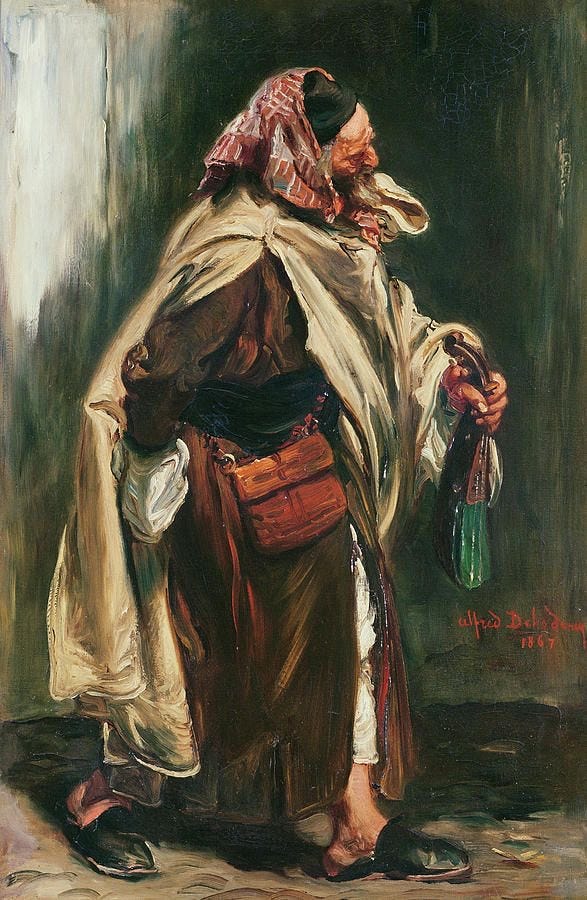
The fixation on “indigeneity”— but really just cultural assimilation— that’s dominated parts of current Mizrahi discourse uses the very binary of racial and cultural essentialism that the left uses in the Palestine movement. Insisting that Jews belong to the Middle East because Mizrahi Jews spoke Arabic, listen to Arabic music, partake in cultural traditions used throughout the Arab world—or perhaps have a specific, darker skin tone—unintentionally implies that Jews who don’t meet that criteria (aka: Ashkenazi Jews) are somehow less legitimate. “As an Iraqi-Jew, I belong here because my grandparents were part of a community in the Levant for 1000+ years.” Okay, so should Yaniv from Petach Tikva, or David from New Jersey, whose grandparents’ entire families were murdered in the Shoah, just go back to Poland? What is the point that you’re trying to make? Jewish belonging should not be adjudicated by the moral logic of those who hate us.
And what about the “non-white” Jews who just happen to be “white”? Those with blond hair, blue eyes, or fair skin, whose ancestors spent centuries in Iberia and North Africa, the Ottoman Empire, or Mesopotamia—steeped in the traditions, liturgies, melodies, and practices of Sephardi and Mizrahi communities—yet never acquired any of the stereotypical “brown” (read: “Arab”) features? To reduce Mizrahi and Sephardi identity to “brownness” is not only crude and simplistic, but deeply orientalist, as if the Middle East is a racially homogeneous place without wide genetic and phenotypic diversity, including variances in skin, hair, and eye color. To equate Mizrahi or Sephardi identity with a singular racial appearance is to exoticize it. What makes this especially troubling is that a framework long used by colonial and orientalist discourses—and now the political left—has begun to circulate within Jewish discourse itself, influencing how Mizrahi Jews, in particular, articulate and perform their own identities in response to contemporary political pressures. All of this can be summed up in a seemingly banal but revealing remark often directed at Mizrahi or Sephardi Jews who do not visually confirm to the exoticized ideal of their appearance: “You don’t look Sephardi!”
But what makes this fixation especially absurd is that it collapses the moment it leaves the Jewish conversation altogether. To non-Jews in the West—many who are unfamiliar with the intricacies of Jewish history, ethnicity, and internal distinctions—none of those distinctions actually register. And yet many Mizrahim have become compliant participants in this idiotic, elaborate charade of visual proof (Look at me! I’m a brown Jew!), a performance so absurd that our Israeli counterparts would find it hysterical. Perhaps we should all carry proof of our membership in this ancient “Eastern club,” whose driving ethos is the racist assumption that everyone in the region is Arab and brown. Maybe we should cover our faces in fresh mud, dress like Aladdin, and drag our flying carpets everywhere we go, with Abu the monkey perched on our shoulders—because that is what the Middle East truly looks like, right?
The impulse behind this rhetoric is no doubt a noble one, which is that it aims to disrupt a mainstream narrative about Jews that many who seek to destroy us propagandize about, to recover the histories of the more than 800,000 Jews expelled from the Arab world in the 20th century, to reinsert those stories into dominant narratives of the Middle East that long marginalized them. That project matters. But it does not require transforming Mizrahi identity into a spectacle of orientalization. Jews today whose roots stem from the Middle East and North Africa are writers, artists, scholars, and political actors engaged in contemporary intellectual and civic life. To allow Mizrahi identity to be framed primarily as an aesthetic or folkloric counter-evidence (Amulets! Arabic! Grandma’s recipe for dolma!) is to diminish one of the most complex, enduring, generative strands of Jewish civilization.
The Futility of it All
Much of this behavior, of course, stems from internalized inadequacy—whether one is Ashkenazi or Sephardi or Mizrahi. The vast corpus of scientific, archaeological, historical, and genetic scholarship demonstrating our undeniable descent from Levantine Jewish populations is apparently insufficient. We must also convince Gamal from Cairo, or Hamza from Karachi, that we are brown, “indigenous,” and human in precisely the same way they are. In all likelihood, Gamal and Hamza could not care less about our “brownness.” They despise us because we are Jews—and because, through years of clerical indoctrination, mosque sermons, school curricula, and state-sanctioned media, Jews have been presented to them as demonic, genocidal enemies of Allah. It is no coincidence that the Abraham Accords countries which recognize Jewish nationhood—Morocco, the United Arab Emirates, Bahrain, and Kazakhstan—have spent the past decade fighting relentlessly against Islamist extremism.
And what, exactly, does any of this accomplish vis-à-vis the white leftist social justice crowd? No matter how “brown” or indigenous we claim to be, Palestinians will always be perceived as browner and more indigenous. At best, we are recast as brown Hebrew-speaking people colonizing and killing even browner Arabic-speaking people. Bravo. You’ve solved the Israeli–Palestinian conflict. You’ve cured leftist antisemitism. And all it took was a sudra and an “insha’Allah” every now and then. Here’s a glass award and a bottle of champagne from a Jewish American legacy organization. We’ll do it all again tomorrow.

The tragedy is that we would serve ourselves far better by teaching others about Jewish practice and its origins, rather than surrendering to the dead end of racial discourse. Jewish culture has never been separable from its monotheistic civilization: our law, liturgy, calendar, ethics, and collective memory are the very mechanisms through which Jewish difference has been lived and preserved. The contemporary obsession with “performing brownness” does not at all liberate Jews from racial thinking. It in fact replaces authentic (and yes, deeply spiritual) Judaism with phenotypical optics, echoing ideologies that first strip Jews of their Middle Eastern religious traditions and then seek to annihilate them on the basis of color—whether through twentieth-century Nazi racial science, or through today’s identitarian frameworks that cast Jews as white settler-colonialists.
To reduce the critical distinction between Ashkenazi and Sephardi/Mizrahi Jews to skin tone is not only historically illiterate; it frames Jewish validity as contingent on visible “cultural” (that is, colorist) diversity, while ignoring that everything about our practices is consistent with the trajectory of a Levantine people who adapted to a life spent in the ancient Mediterranean. One might reasonably ask why Jewish institutions appear so eager to align themselves with movements that re-racialize Judaism in precisely this way—and at what cost to Jewish identity itself.
Predictably, any anti-religious activists who rely on these institutions are incapable of articulating a serious religious case for Jewish sovereignty, having dismissed Judaism itself as backward or unserious, such that they are left with only one register through which to argue Jewish legitimacy: race politics. Given the fate of so many civilizations that developed alongside us, one would expect us to exist only in museums—and yet here we are: a living, breathing, sovereign exhibition. We are a nation that can don our tallit and tefillin each morning, recite our prayers in Hebrew and Aramaic, and bake bread in preparation for Shabbat, knowing that these practices were forged during our time as nomads in the Sinai Peninsula. Shouldn’t that be enough?
We reject the premise that Jewish belonging must be argued in racial terms at all, simply because any effort to interpret Jewish history and peoplehood through the grammar of indigeneity or phenotype relies on concepts that Jewish peoplehood itself predates. The Jewish people have survived for thousands of years precisely because we did not assimilate to the expectations of others, and instead maintained our own internal coherence—legal, ritual, linguistic, and ethical—across various geographies and appearances.
To insist otherwise is to trap Jewish identity inside contemporary politics and identitarianism, totally foreign to Judaism or Jewish self-understanding.
Treating Mizrahi Jews as “proof” in a perverse litmus test of belonging—measured by conformity to a homogenized Arab cultural framework—ultimately does the work of those who seek to degrade Jewish tradition, which has always stood on its own terms.
Great article the irony is Ashkenazi Jews were slaughtered because they weren’t European.
This was an excellent article and I learned quite a few things about the Jewish landscape. I'm a secular Iranian and I've also experienced the loony Left's antics when it comes to opposing Islam. It's all too similar to your experiences so I won't labour on it now, but I just wanted to say that I sympathise with your plight and I'm sorry that you didn't find allies where expected. Please know that you have many many Iranian friends. Am Yisrael Chai.❤️🫂