Ruben Shimonov is the National Director of Sephardi House & Education at the American Sephardi Federation, and founder of the Tebá Project, a new year-round initiative supported by the UJA Federation of NY that strengthens Jewish visibility through Sephardic and Mizrahi arts, culture, and storytelling.
Habibi, a beautifully rich Arabic word meaning “my love” is found in songs, poetry, and everyday conversation, and used affectionately for friends, family, and strangers alike. From my first glance at New York Magazine’s recent SWANA issue, titled “Habibi City,” I wondered how fully this word could capture the extraordinary tapestry of peoples, languages, religions, and cultures that make up this region—and more importantly, their presence here in New York City. An increasingly confident generation of young New Yorkers with roots across Southwest Asia and North Africa are creating art, music, culinary experiences, and rising new communities, but “Habibi City” demonstrates how SWANA inclusion is exceptionally narrow and politically charged. Missing from it was an entire segment of New York City’s Jewish community: the city’s Sephardic and Mizrahi Jews.
As I moved through the magazine’s portrait of contemporary SWANA life in NYC, the omission of Sephardic and Mizrahi Jews—our city’s vibrant Syrian, Persian, Bukharian, Iraqi, Yemenite, Egyptian, Moroccan, and Lebanese Jewish communities—was appalling. Other than the fact that these communities come from across the SWANA region, New York City’s SWANA Jews are an integral and unique part of the city’s cultural fabric. Over the last century, they’ve built synagogues, restaurants, businesses, philanthropic organizations, cultural institutions, and community centers across New York. Inconveniently, for the political framework constructed by “Habibi City,” many also maintain a deep-rooted religious and historical connection to the Land of Israel—or what one of the articles in the issue rather oddly called the “land mass currently called Israel.”
To be precise, Sephardic and Mizrahi Jews are not completely absent from “Habibi City.” The main essay introduces Laura Elkeslassy as an Arab Jewish singer organizing a Mimouna celebration at Barzakh Café, and elsewhere mentions Jews participating in these spaces—including, pointedly, “anti-Zionist Israelis.” Jewish participation seemed most accepted within “Habibi City,” in fact, when the Jews in question were vetted through an implicit anti-Israel purity test, where they distanced themselves from or outright reject Zionism (a term the article treats pejoratively, though most Jews define it essentially as Jewish self-determination in their ancestral homeland).
Through these rare glimpses, Sephardic and Mizrahi Jews never emerge as one of the substantial and vibrant populations connecting New York to the SWANA region, no matter their political or religious beliefs. The term SWANA, according to the cover story’s writer, is one which provides “a decolonial framework.” This is indeed a compelling argument for using the term—even if it is a bit clunky—as “Southwest Asia and North Africa” repudiates the Eurocentrism and arbitrary foreign demarcations of the socially constructed term “Middle East.” However, according to “Habibi City,” the term conveys far more than that. Being part of the SWANA community, the writer argues, entails a “set of shared beliefs,” including “that what happened in Gaza in the aftermath of October 7 constitutes a genocide.” Near the conclusion, “Zionism” appears alongside xenophobia and Islamophobia among the forces “SWANA New Yorkers still face.” At that point, one’s geographical origins surreptitiously become an ideological category.
Jewish communities have lived across North Africa and the Middle East for millennia—forming part of the cultural landscapes of Morocco, Egypt, Syria, Lebanon, Iraq, Iran, Yemen, Kurdistan, the Land of Israel, and beyond—long before any of these contemporary political vocabularies existed. The political ideologies that defined the twentieth century radically transformed the demographics of the region. The overwhelming majority of these ancient communities—totaling nearly one million—were uprooted, expelled due to the rise of Pan-Arab Nationalism, Political Islam, Nazism and Communism. Hundreds of thousands resettled in the newly established State of Israel, joining Jewish communities already living there.
For many Sephardic and Mizrahi Jews, Arabic cultural identities and connection to Israel are not opposing forces, but intertwined chapters of the same family story. Sephardic and Mizrahi Jews, in and outside of Israel, hold diverse political views, but regardless, each of us still maintain a deep connection to the Levant. Jewish attachment to Israel need not negate Palestinian attachment to the same land, but neither should participation in SWANA culture require Jews to amputate Israel from their identities.
Which is why this past June, I was overjoyed to see another portrait of SWANA New York unfold, one that cast a vibrant light on the city’s Sephardic and Mizrahi Jews and their relationships with other communities from the region.
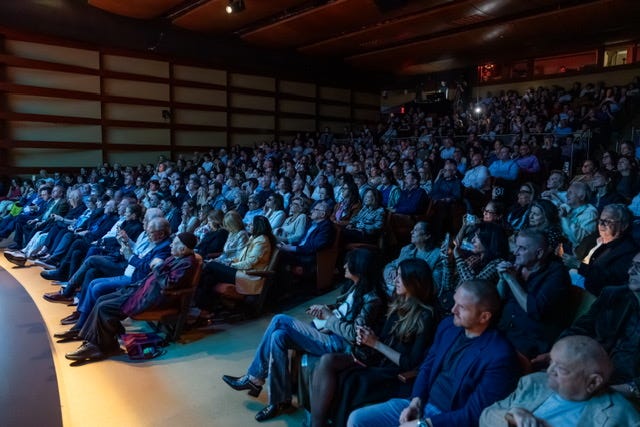
As one of the organizers of the American Sephardi Federation’s Festival Sefarad NYC, throughout the month of June I encountered a vast landscape of Jewish histories and cultures far too expansive to be captured by a single acronym. With more than 60 partner institutions and 35 events across Manhattan, Brooklyn, and Queens, the festival explored what we call the Greater Sephardi world, stretching across North Africa, West Asia, the Mediterranean, Central and South Asia, and beyond.
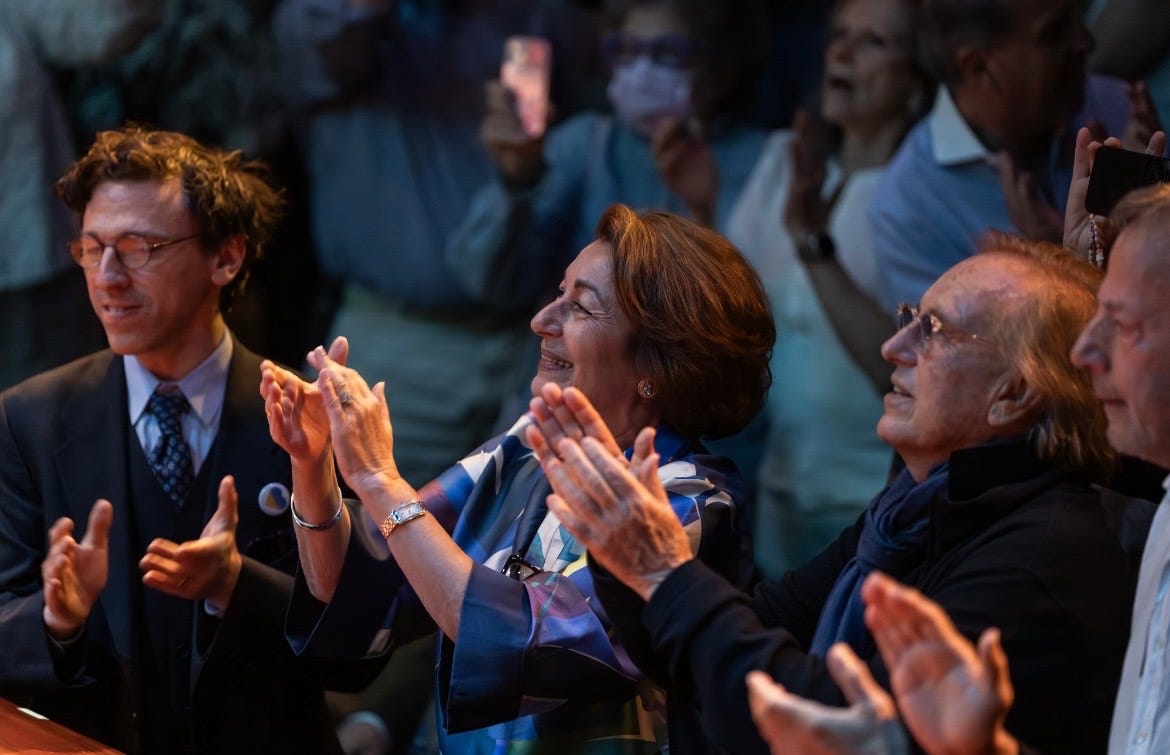
At the Pomegranate Awards Ceremony at the Museum of Jewish Heritage, attendees gathered to celebrate Sephardic creativity in the present. Honorees included Fauda co-creator Avi Issacharoff—a Kurdish and Bukharian Israeli Jew—and Algerian-born philosopher and filmmaker Bernard-Henri Lévy. The awards themselves were gorgeous pomegranate sculptures created by Baghdad-born artist Oded Halahmy.
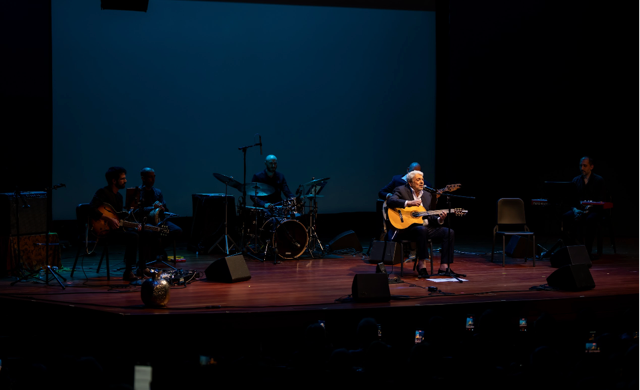
The following night, legendary Enrico Macias took the stage before a packed auditorium. Born in Algeria, Macias has for decades been one of the great musical voices of the North African Jewish world, and his songs seamlessly blended French, Arabic, Hebrew, and English.
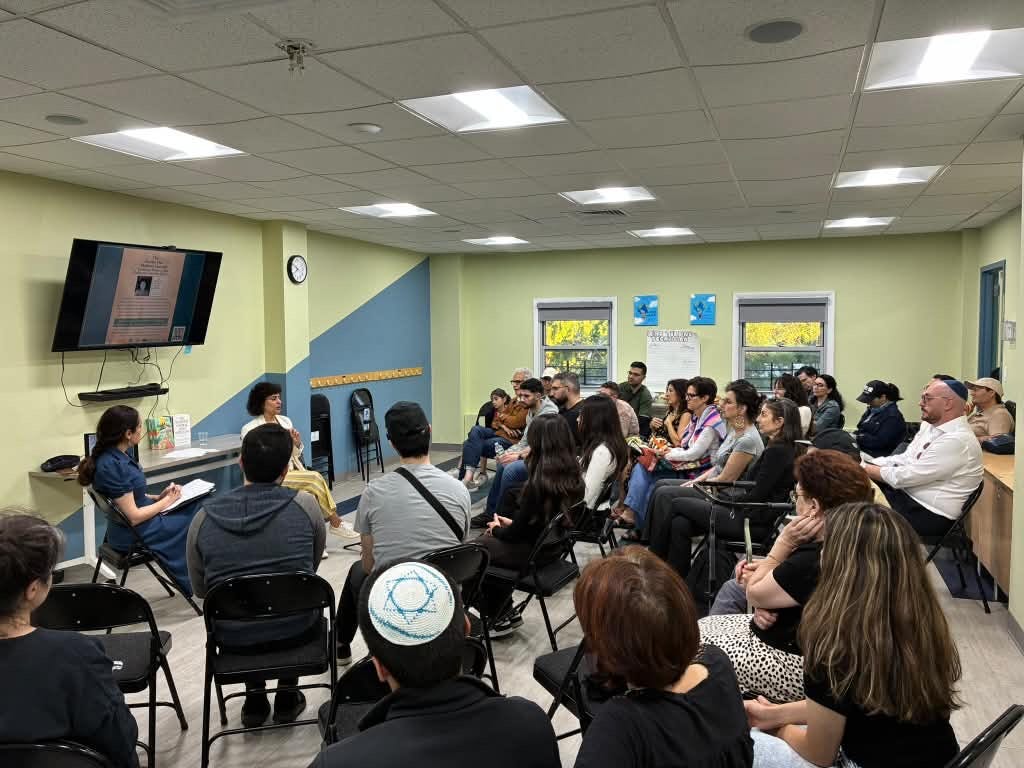
A few days later, another event took the audience on a journey spanning Iran, Turkmenistan, Uzbekistan, Afghanistan, Pakistan, Israel, and beyond. Occurring in Forest Hills, Queens—the heart of Central Asian Jewish life in the U.S.—Dahlia Abraham-Klein’s talk on her historical fiction novel, Caravan of Hope: A Bukharan Woman’s Journey to Freedom, the story of a Central Asian Jewish woman’s journey through Uzbekistan, Afghanistan, and Pakistan in a quest towards religious freedom and education.
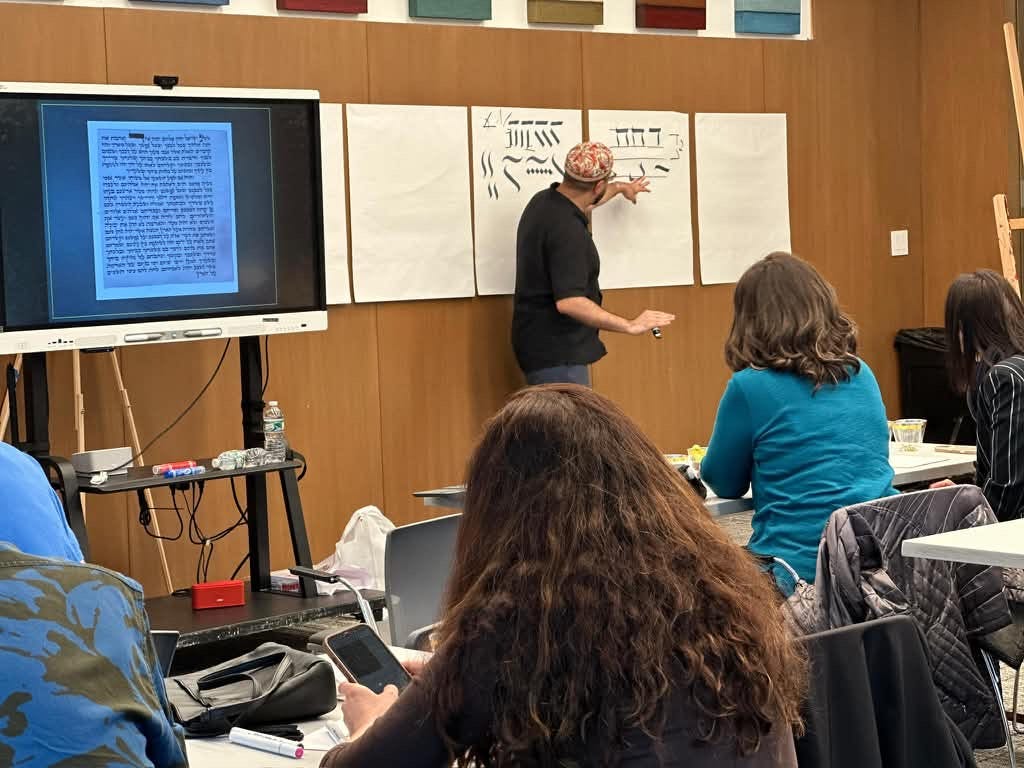
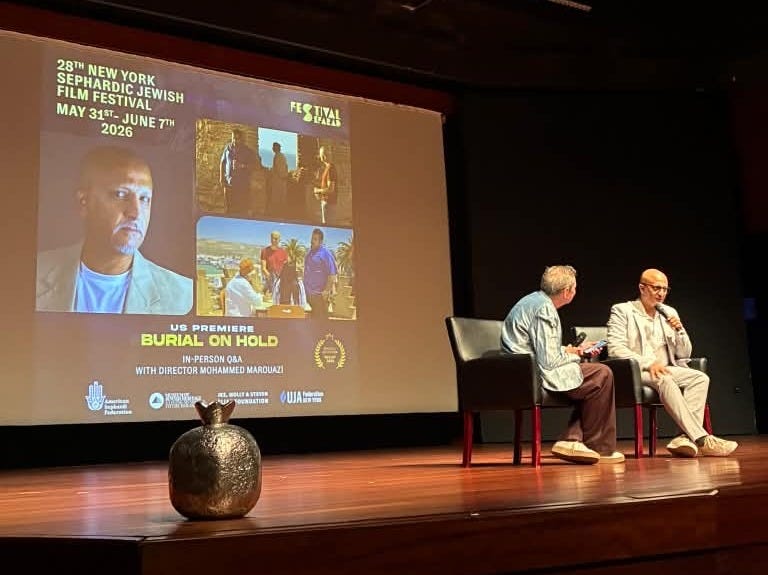
Other Festival Sefarad events highlighted relationships between Jews and Muslims of the SWANA region. I was honored to lead two interfaith calligraphy workshops exploring Hebrew, Arabic, and Persian calligraphy and the deep connections between the languages—and we explored how our linguistic, creative, and spiritual traditions have developed beside and through one another for centuries. This was also evident in the festival’s Moroccan Night, which paired live North African music and sweets with the U.S. premiere of Mohammed Marouazi’s Burial on Hold—a Moroccan Jewish-Muslim comedy-drama that follows the aftermath of the death of Shlomo, a Moroccan Jewish man whose family must confront an unexpected dilemma over whether he should be buried in a Jewish or Muslim cemetery.
Film was itself a major part of Festival Sefarad, bringing stories to the screen from across the Greater Sephardi world: from Mashhad, depicting the hidden Jewish community of 1930s Iran, and The Adeni of Stamford Hill, about Yemenite Jews from Aden living in London, to The Splendours and Miseries of the Camondo Family, a documentary tracing the rise and tragic fall of a prominent Ottoman-Jewish mogul family. Near the end of the month, Tony Award winner Ari’el Stachel presented us with a groundbreaking live theatrical performance of Yemen, Israel, America: A Jewish Journey. Drawing on his own life experiences, Stachel explored his dilemmas of belonging in this stirring one-man show before the evening opened into a Yemenite celebration of music, dance, and food.
All these were only a handful of the many opportunities New Yorkers had to explore the vibrancy of Sephardic and Mizrahi cultures. In Tribeca, a Shabbat dinner brought together 130 individuals to celebrate the unique heritage of Baghdadi Jews; elsewhere in downtown Manhattan, Ciara Shalome spoke about documenting Sephardic and Mizrahi oral histories via her influential Instagram page, @themizrahistory. “Spicy Jews” brought Sephardic and Mizrahi comedy to a sold-out crowd with comics such as Natan Badalov, Isaac Gartenberg, Olga Namer, Two Jews, and Ami Kozak. An LGBTQ+ Sephardic and Mizrahi Shabbat dinner was hosted; a walking tour of the Lower East Side explored the histories of Jews from Turkey, Syria, and elsewhere in the Ottoman world who made Lower Manhattan home. Moroccan-Israeli artists Neta Elkayam and Amit Hai Cohen brought a unique musical sensibility to Brooklyn shaped by Morocco and Jerusalem, classic and contemporary, traditional and experiential. Musician and vocalist Itay Benda closed out the month with a concert at City Winery featuring songs in Hebrew, Arabic, Persian, Turkish, along with many other languages.
The danger of “Habibi City” is that it distorts and oversimplifies so that communities from the region or excludes them from the map altogether. Even the affectionate title “Habibi City” demonstrates the limits of that map. As I mentioned at the beginning of this article, habibi is an expressive and evocative Arabic word, but Arabic alone does not reflect the robust diversity of the region the issue seeks to encompass. Its languages also include Persian, Turkish, Tamazight, Kurdish, Armenian, Aramaic—and yes, Hebrew. Its peoples certainly include Muslims—but also Bahá’ís, Christians, Jews, Yazidis, Zoroastrians, Druze, Chaldeans, Copts, and more.
The Middle East and North Africa, or SWANA—however different people choose to call these lands—have never belonged to a single religion, ethnicity, language, color, or political ideology. This region is multilayered and complex, containing histories of coexistence and conflict, migration and exile—and is filled with people whose cultures overlap even when their political stances diverge.
Sephardic and Mizrahi Jews belong in that story, and not only when their politics fit someone else’s narrow definition of what they believe the region should look like.
If we truly want to understand the extraordinary and vibrant West Asian and North African New York around us, we need a city map large and detailed enough to see it in full.