

“Go back to Poland!” It’s a phrase which Jews across the world are now routinely forced to confront. It is not, as the far-leftist camp would have us believe, a call to dismantle the allegedly white, European, and settler-colonial State of Israel. The specific use of Poland as a stand-in for the place to which Jews supposedly “belong”—despite the obvious historical and demographic falsity of this claim—is particularly sinister. It invokes a country in which at least 2.7 million Jews were murdered by Nazi Germany in ghettos, villages, forests, camps, and killing centres during the Second World War. In that context, the anti-Zionist demand that Jews return to Poland is more accurately understood as: “You should have died there.”
That such a grotesque slur could be coined at all, let alone dominate global protest culture, is a shocking indictment of the failure of Holocaust education. A January 2025 report by the Claims Conference, based on surveys conducted across the United States, United Kingdom, France, Austria, Germany, Poland, Hungary, and Romania, revealed alarming gaps in Holocaust knowledge among young adults. In several countries, a striking proportion of respondents aged 18–29 said they had either not heard of the Holocaust or were unsure whether they had heard of it at all. Nearly half of Americans surveyed were unable to name a single Nazi concentration camp; yet, thankfully, overwhelming majorities across all eight countries expressed strong support for continued Holocaust education.
The results point to an uncomfortable truth: people are not unwilling to learn about the Holocaust. On the contrary, many clearly want to. The failure lies with Jewish organisations and educational institutions that have not succeeded in teaching the Holocaust in a way that leaves a meaningful impact. The problem is largely that Holocaust history and Jewish studies have been perilously separated in the modern classroom. The Holocaust is increasingly treated as a historical atrocity that happened to the world at large. Judaism is cast, often lazily, as one of the so-called “major religions” meriting, at best, a few weeks of study and perhaps an exam question or two.
The inevitable result of teaching children about the Holocaust without teaching them where Jews come from—their ancient roots in the Levant, the ethnoreligious character of Jewish peoplehood, and the ways in which this differs from Western conceptions of religion—is that they are left with a dangerously distorted picture of Jewish history. They are rarely taught that Nazism itself was predicated on the racial demonisation of Jews as a non-European people. In his 1930 work of scientific racism, Rassenkunde des jüdischen Volkes (“Ethnology of the Jewish People”) the influential German eugenicist Hans F. K. Günther classified Jews as the final wave of an “Amorite-Canaanite migration” of Semitic-speaking tribes from Babylonia into Syria and Palestine around 2500 BCE. From this premise, he situated Jews within the broader framework of an “Oriental race,” to which he attributed an inherent capacity for ambush and deception. Günther’s observations were explicit: “In today’s West, the Oriental race, like the Near Eastern race, is represented chiefly by the Jews living there.”
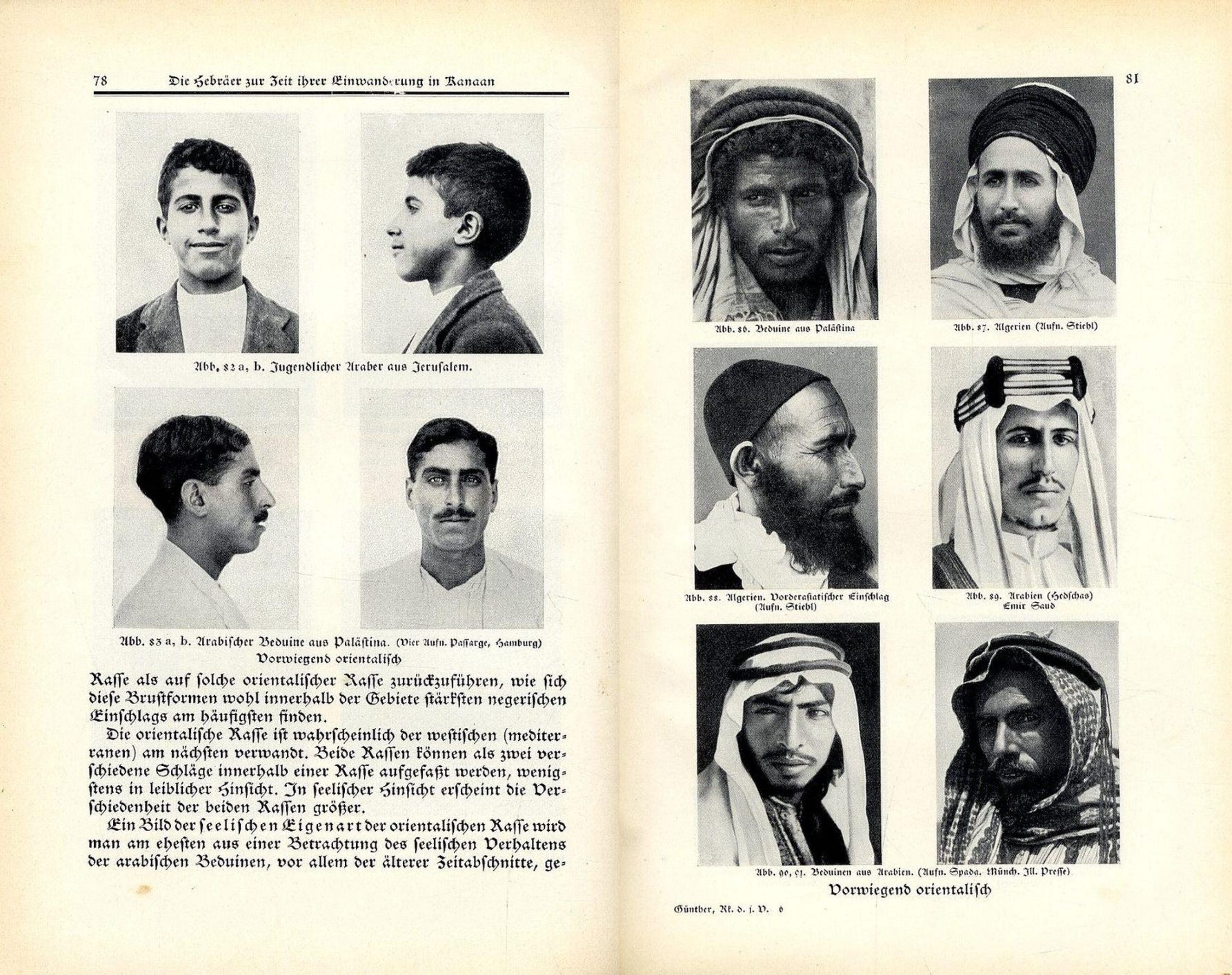
Yet many go through life with the impression that Jews simply materialised out of thin air in Berlin and Warsaw in 1933, and were then punished by Adolf Hitler for doing so. They are not taught of Hitler’s speeches decrying Jews as “escaped Orientals” who had exploited their emancipation in Europe to spread innumerable political and physical diseases. Even where the Holocaust is deemed compulsory teaching material, such as in the United Kingdom, Holocaust “education” is often reduced to watching Mark Herman’s atrociously counter-historical The Boy in the Striped Pyjamas (2008). It is a travesty that no internationally agreed-upon curriculum exists for this subject. Crucially, the sore lack of structured instruction around this topic has helped perpetuate three dangerous myths.
Firstly, that the Holocaust only affected Ashkenazi Jews in Europe. Of course, they constituted the majority of those deported to the camps or murdered in other heinous circumstances. Yet we can hardly ignore the Farhud of June 1941: the infamous pogrom carried out against Baghdadi Jews by Arab nationalist mobs in the atmosphere created by Rashid Ali al-Kailani’s Nazi-aligned junta. Nor can we ignore the crimes perpetrated in North Africa by the French Vichy regime, which sent thousands of Jews to forced-labour camps in Tunisia and southern Algeria. Endemic knowledge gaps surrounding the Sephardi-Mizrahi experience of the Holocaust persist even within Jewish communities themselves. During my own primary education at a Jewish school, where I was one of the only Sephardi students, it was routinely drilled into us that the Holocaust somehow ended at the shores of southern Europe. One shudders to think what fallacies are being taught elsewhere.
Secondly, that the State of Israel was created for the Jews by the West as reparations for the Holocaust. In a 2008 lecture, the Israeli historian Yehuda Bauer dismissed this claim as “total and absolute nonsense”, arguing that the opposite was true. In fact, restrictions on Jewish immigration to British Mandatory Palestine after 1939 meant that “the Holocaust almost prevented the rise of the State of Israel. More Holocaust, less Israel.” Between 1945 and 1948, some 69,000 Jews from Europe and North Africa boarded illegal ships bound for Palestine, only to be detained by Western authorities—above all the British, who interned many of them in Cyprus. Nor was the Holocaust anywhere cited in internal diplomatic correspondence regarding the UN Partition Plan for Palestine adopted in November 1947.
If Western governments were ever aware of the true extent of Nazi crimes, that awareness did not translate into a moral commitment to Jewish statehood. The stubborn persistence of the indemnity myth has enabled a widespread understanding of Israel as the product of post-Holocaust benevolence at the expense of Palestinian Arabs, rather than of Jewish resilience and nation-building through the early Zionist movement. Such a serious lack of education cannot always be blamed on the political biases of teachers’ unions or educational institutions in the West. Jewish communities must proactively challenge this especially destructive narrative.
Thirdly, there has been a propagandistic surge in the absurd claim that Arabs in Palestine “welcomed” Jewish refugees fleeing the Holocaust, only to be betrayed when those same Jews supposedly conspired with the Zionist movement to dispossess them. This complete fabrication has been echoed by American politicians such as Rashida Tlaib, who suggested in 2019 that her Palestinian ancestors had helped provide a “safe haven” for Jews after the Holocaust, only for their “dignity” and lives to be taken away in the process. Aside from being a near-perfect animation of the first two myths, the purpose of this claim is especially vile: to erase, or at least whitewash, the documented associations between Palestinian Arab leadership and the architects of the Holocaust.
One figure who repeatedly emerges from the darker recesses of this history is Haj Amin al-Husayni, the Grand Mufti of Jerusalem. Driven by a profound hatred of Jews, he built a private militia in Mandatory Palestine, exploited Muslim Brotherhood activism to promote himself as the sole representative of the Palestinian cause, and ultimately collaborated with Nazi Germany in the belief that the destruction of global Jewry would reduce the Zionist movement to dust and ashes. His personal meetings with Hitler, his 1943 visit to the Trebbin forced-labour camp, and his Arabic-language broadcasts from wartime Berlin urging Muslims to “kill the Jews wherever you find them” are frequently cited in pro-Israel circles. Yet these familiar examples have tended to obscure the full extent of his contribution to the Nazi project.
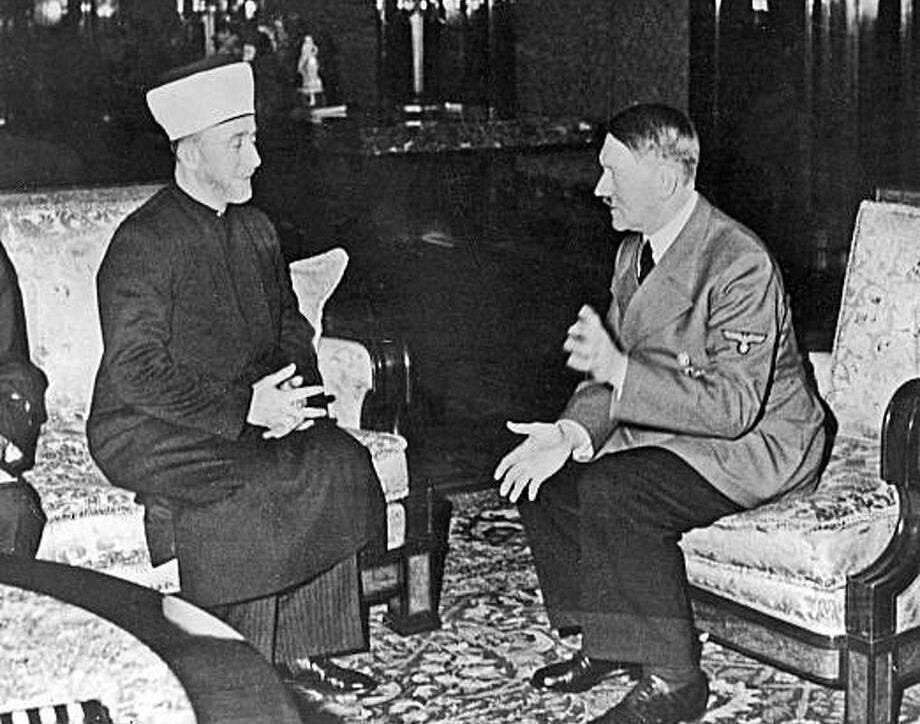
In their panoramic 1971 account of the First Arab–Israeli War, O Jerusalem!, Dominique Lapierre and Larry Collins recounted:
[T]he Mufti had done everything he could to secure a German victory. He had recruited Arab agents to drop behind the British lines as saboteurs. He had helped raise two divisions of Yugoslavian Moslems for the SS. He had facilitated the German entry into Tunisia and Libya. His agents had provided the Wehrmacht with a forty-eight-hour warning – ignored – of the Allied landings in North Africa. Fully aware of the finality of the Final Solution, he had done his best to see that none of its intended victims were diverted to Palestine on their way to Reichsführer Heinrich Himmler’s gas chambers. In 1943 he intervened personally with Reich Foreign Minister Ribbentrop to prevent the emigration of four thousand Jewish children from Bulgaria to Palestine.
This was not the work of one crazed man, and the Mufti was far from the only member of the al-Husayni clan with profound Nazi ties. In 1938, he sent his younger cousin, the chemist and celebrated guerrilla commander Abd al-Qadir al-Husayni, to Germany to study the construction and use of incendiary devices. Abd al-Qadir later travelled to Iraq, where he participated in al-Kailani’s short-lived coup of April 1941 and helped orchestrate the Farhud against Baghdad’s Jews two months later. Between 1943 and 1945, while enjoying the protection of the Saudi royal family, he returned to Germany and spent six weeks further developing his expertise in explosives and bomb-making. Of course, some individual Arabs in Palestine and beyond held favourable views of Jews. Palestinian Arab leadership, however, was almost entirely animated by the Mufti’s favourite slogan: “Drive the Jews into the sea.”
The second prong of this myth—that Holocaust survivors conspired with Zionists to kick the Arabs out of Palestine—is likewise false. As the Israeli historian Ori Yehudai explains, thousands of Jewish refugees who had survived the devastation of the Second World War did not initially seek to remain in Palestine at all, but hoped to rebuild their lives in Europe. Their attempts at repatriation through the United Nations Relief and Rehabilitation Administration (UNRRA) between 1945 and 1948 created considerable discontent among the Zionists, whose leaders were by now absolutely convinced that the absence of Jewish sovereignty had helped make the genocide of the Jews possible. The UN appeared determined to move Jews out of Palestine; the Zionist movement was equally determined to keep them there. Some things, it seems, do not change.
Had the Mufti devoted as much energy to seeking a resolution with the Jews as he did to advancing Hitler’s murderous ideology, the history of the Palestinian Arabs might have unfolded very differently. Yet even those who recognise the superior statecraft of the Zionist camp, the debilitating factionalism of Arab politics, and al-Husayni’s antisemitism have fallen prey to this myth. In his 2014 book Genesis: Truman, American Jews, and the Origins of the Arab/Israeli Conflict, the acclaimed American journalist John B. Judis acknowledges that Palestinian Arab leadership was “afflicted by tribal rivalries among notables”; that many later Jewish arrivals in Mandatory Palestine were “refugees from anti-Semitism rather than committed Zionists”; that al-Husayni hoped for a Nazi victory over the Allies; and that, on the eve of civil war, Jewish labour produced roughly 80 per cent of Palestine’s industrial output. He nevertheless concludes, as a matter of first principle, that Zionism was a conspiracy to “screw the Arabs out of a country that by prevailing standards of self-determination would have been theirs.”
The Western education system is largely responsible for perpetuating this kind of revisionism. It is now near-impossible to challenge the romantic fiction that Palestinian Arabs spent the Second World War as heroic protectors of Jewish refugees, offering them salvation only to be crucified by a white settler-colonial Judas. During my time studying History at King’s College London, I cited al-Husayni’s record of genocidal antisemitism in a seminar on the Israeli–Palestinian conflict. I was accused of portraying all Palestinians as complicit in the Holocaust and was subsequently subjected to disciplinary proceedings by my own university. The fear of appearing to tolerate Islamophobia or anti-Arab prejudice has led many institutions to suppress legitimate historical inquiry, such that Jews can now be punished for presenting a factual account of a genocide in which they were the primary victims.
As it currently stands, Holocaust education is alarmingly incomplete. That incompleteness is needlessly damaging perceptions of Jews and Israel. It is also impoverishing the intellectual lives of Jewish students, who are forced to engage in debates whose founding premises are themselves profoundly mythological. If the insistence on isolating Holocaust education from Jewish education were truly producing results, we would not be living through a period in which Holocaust distortion and open denial are at record-breaking levels. Nor would Jews be forced to plead with institutions to adopt the International Holocaust Remembrance Alliance’s working definition of antisemitism, which provides examples as to how antisemitic tropes or Holocaust inversion can infect anti-Israel discourse.
If anything, this model often forces Jews to relitigate their own history whenever confronted with even the most basic questions about Judaism, let alone the far more complex relationship between the Holocaust and the Israeli–Palestinian conflict. The best long-term solution is to permanently move Judaism out of the narrow confines of religious studies and into the history curriculum at both primary and secondary level. Even if students later arrive on campus or enter professional life with questions, at least the most important ones will have been answered. They will know who Jews are, what the Holocaust sought to destroy, and why they should not be so easily seduced by the vitriolic lies of extremist antisemitic groups. Perhaps then people will stop telling Jews to go back to Poland—or, at the very least, feel far less comfortable doing so.

I didn't know about the Nazi labor camps for Jews in north Africa. Thank you for informing us
Aurele, there is significant scientific evidence (chemical, in architecture and engineering) which puts the matter to rest: https://www.printernational.co.uk/timmann2/history.htm#holocaust