
Manuel Férez Gil holds a PhD in Sociology from Universidad Alberto Hurtado. This article draws on his doctoral dissertation, Diasporicity and Belonging: Diasporic Connections and Disconnections toward Homeland(s). The Case of Chilean Sephardic Jews. Universidad Alberto Hurtado de Chile, 2024. The Chilean Jews are a small Sephardic Jewish community far from the major centers of power, who demonstrate the fascinating dynamic between intracommunal borders—which separate without requiring any formal procedure—and extracommunal frontiers, which may be crossed through conversion, naturalization, or choice.
The lens through which both are examined here is that what he calls diasporic “thickness,” the concept that structures the argument that follows.
Chile as a Laboratory of Multifocal Diasporicity
To understand what the diasporic experience among Chilean Sephardic Jews, it is first necessary to understand their setting. Chile is a country with a relatively small Jewish community—estimated at approximately 18,000 people in recent decades—yet one that is deeply structured around an extensive institutional network of federations, schools, synagogues, and even cemeteries.
Within that community, three broad groups—Ashkenazi, Mizrahi, and Sephardic—have coexisted for more than a century. The Sephardic community itself numbers approximately 5,000 people, making it a significant but clearly distinct component of Chilean Jewish life.

What makes Chile particularly distinctive, however, is that it is also home to other well-established diasporas whose historical, cultural, or religious ties make them unavoidable interlocutors of the Jewish community. The most visible—and the most politically charged—is the Palestinian diaspora, present in Chile since the late nineteenth century. Recent estimates place the number of Chileans of Palestinian origin, or those who identify as such, somewhere between 300,000 and 500,000.
Set against a Jewish community of approximately 18,000 people, this represents a demographic asymmetry of more than twenty to one. Few countries outside the Middle East offer such a striking configuration. It is this asymmetry that makes Chile an exceptional case and helps explain many of the extracommunal dynamics experienced by local Sephardic Jews.
Alongside the Palestinian diaspora are Lebanese, Iraqi, Syrian, and Moroccan communities, each producing their own patterns of tension and proximity around shared, disputed, or simply forgotten homelands.
It is at this intersection that the central hypothesis of my research becomes relevant: intracommunal borders—the internal differences between Ashkenazi, Mizrahi, and Sephardic Jews—become more porous or rigid in response to movements simultaneously taking place at the extracommunal frontier. Both, I argue, can be examined through the same conceptual tool.
Homeland and Diasporic “Thickness”: Two Concepts
Before going further, it is worth clarifying the two concepts that structure the argument.
By homeland, I mean a space—real or imagined, often left behind in time as much as in geography—that carries a powerful emotional and identitarian charge and can be communicated or transmitted to subsequent generations. More formally, it is a cultural, historical, and/or political space toward which people feel affinity, memory, or nostalgia, one that influences both individual and communal self-perception and toward which some part of their actions, emotions, and thoughts is directed.
The diasporic cartography of a community may therefore contain several homelands at once, each carrying a different relative weight.
Their relative weight can be understood through the concept I call diasporic thickness.
Diasporic thickness makes it possible to distinguish the varying degrees of diasporicity that individuals and communities maintain in relation to each of the homelands within their network. Diasporicity is not a binary condition. Rather than a fixed state, it is better understood as a dynamic system of connections expressed through cultural practices and forms of belonging: the quality of dispersion when it is accompanied by an active consciousness and a narrative of connection to one or more territorial points of reference.
Thickness grows through the accumulation of cultural capital and through an individual’s explicit attribution of meaning to a particular territory. When those connections and their transmission weaken, diasporicity becomes thinner: a homeland may gradually become little more than a place of origin, stripped of an active identitarian significance. This dynamic is particularly evident among many Americans of Polish, Irish, or Italian descent, for whom ancestral origins may be genealogically significant, but detached from everyday culture practice, collective memory, or personal identity.
The concept can be observed through several forms of cultural capital. Objectified capital includes the material things that connect people to their heritage: books, old documents, works of art, family photographs, or the mezuzah fixed to a doorpost. Embodied capital appears in language—in the Sephardic case, Ladino—as well as in culinary tastes, melodies, habits, and aesthetic preferences transmitted across generations. Institutionalized capital consists of the norms, knowledge, and forms of recognition validated by families and communal institutions.
Thickness is therefore not determined by a single indicator. It emerges from the combination of frequency, intensity, transmission, and explicit attribution. A practice counts as diasporic in relation to a particular homeland only when those who practice it consciously connect it, in their own narratives, to that place. Without attribution, there is no thickness.
These two tools—multiple homelands and varying degrees of diasporic thickness—make it possible to read the Chilean Sephardic case on three interconnected levels: the intracommunal, the extracommunal, and the relationship between the two.
Intracommunal Borders: When Thickness Is Unevenly Distributed
The first kind of boundary that matters here requires neither a signed document nor a conversion procedure. It is a boundary, a liminal zone within the we, where differences matter without becoming definitive, where the continuity of “Jewishness” survives internal variation.
For Chilean Sephardim, that border is drawn primarily in relation to two internal interlocutors: the Ashkenazi community—larger in number and historically dominant in institutional life—and the Mizrahi community, with which Sephardim share some linguistic, culinary, and ritual inheritances, though not always the same social circles.
The concept of diasporic thickness makes it possible to see this border more clearly.
Israel generally displays a high degree of institutionalized thickness, sustained by political identification and broader patterns of religious observance. Family homelands in the Mediterranean—Salonika, Smyrna, Istanbul, Beirut—may retain substantial embodied thickness, sustained through food, language, and song, while their objectified thickness declines as material connections disappear or cease to be transmitted.
Distinctively Sephardic markers—Ladino, Mediterranean liturgy, and the ritual songs associated with the Jewish calendar—often undergo a more noticeable thinning in public and institutional life. While support for Israel or general Jewish observance may be highly visible communal practices, these Sephardic markers are more often confined to the private sphere, to what might be called the family homeland: high in thickness, but low in visibility.
This produces one of the least visible “borders” in the Sephardic experience, although it’s lack of visibility does not signify its importance.
A tradition may occupy little institutional space and yet possess enormous emotional intensity within a family. It may be almost invisible to an outside observer while remaining one of the deepest elements of an individual’s identity.
Visibility and thickness are not the same thing.
This boundary, then, does not simply run between “Sephardim” and “Ashkenazim.” It also runs within Sephardic identity itself: between what is displayed and what is preserved, between what the institution recognizes and what the family keeps alive, between memory that is publicly known and memory that is passed down privately.
The boundaries between Sephardic and Mizrahi communities in Chile present a different pattern in regard to each other. Their migratory histories intersect in the late Ottoman Empire and the port cities of the eastern Mediterranean. Their cuisines speak to one another; Ladino and Judeo-Arabic share a broader linguistic world; their liturgical melodies can often sound familiar across communal lines.
In Chile, it is not unusual to encounter hybrid identities in which individuals understand themselves as both Sephardic and Mizrahi or organize their ritual lives by drawing on elements of both traditions.
Porosity, in fact, is what distinguishes a border from a frontier. When porosity increases, the border becomes thinner. When communities enter periods of internal reaffirmation, it thickens.
Extracommunal Frontiers: Disputed, Shared, and Ignored Homelands
“Extracommunal frontiers” are much more charged. They distinguish Jew from non-Jew, Christian from non-Christian, Muslim from non-Muslim, Chilean from non-Chilean. They may be crossed through religious conversion or formal naturalization. For Chilean Sephardim, the tensest—and the most revealing for the purposes of this argument—is the frontier associated with the Palestinian diaspora in Chile.
The coexistence of these communities produces, according to the typology I propose, three kinds of relationships among homelands: disputed, shared, and ignored.
The quintessential disputed homeland is the territory of historic Palestine/Israel: the same physical geography claimed through different historical memories and traditions of sacred attachment. Some cultural spaces of broader Latin American life may function as shared homelands, though with considerably less diasporic thickness. Ignored homelands emerge where meaningful intercultural contact scarcely occurs. These categories are highly dynamic. An ignored homeland can become activated; a shared homeland can become disputed, and vice versa.
But what matters most is the disparity in their thickness.
In the Chilean Sephardic case, Israel was the only homeland that displayed consistently high diasporic thickness across the different dimensions examined in my research. It appeared, in varying degrees, in the individual, familial, and communal lives of the people studied.
By contrast, Sefarad/Spain appeared as a profoundly depoliticized homeland. Chilean Sephardim maintain a diasporic relationship with it through history and culture, but not through engagement with contemporary Spanish politics, toward which the community generally shows little interest. This asymmetry matters because when one homeland becomes thicker, others may become relatively thinner. And that redistribution extends directly into intracommunal life.
Two Sides of the Same Coin
At this point, the central argument can be stated more directly: intracommunal borders and extracommunal frontiers are two sides of the same coin in diasporic cultural experience. Diasporic thickness offers a way of reading both.
This has three consequences for the Chilean Sephardic case.
First, internal borders move in response to external circumstances.
When the frontier with the Palestinian diaspora is experienced as particularly disputed—for example, during periods of heightened regional conflict—Chilean Jewish communities tend to experience a defensive thickening of their connection to Israel. This process of cohesion can make Sephardic-Ashkenazi differences less important than membership in a broader Jewish we.
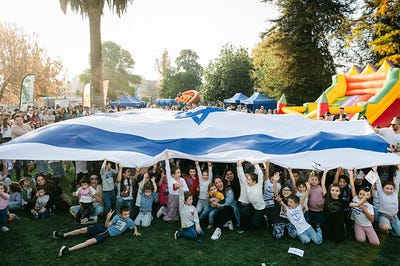
The intracommunal border becomes thinner because communal practices selectively reinforce the thickness of the disputed homeland. When tensions subside, internal borders may “return” to their usual thickness. Attention can shift back toward family homelands and their more specific markers, which may then recover some of the prominence they have lost.
The external frontier, in other words, is the force which moves the internal border.
Second, thickness is not distributed at random. It follows a logic of political priority.
Community efforts centered on defending a particular homeland—Israel—have tended to concentrate institutional capital and public visibility around it. This produces a double effect: the disputed homeland becomes thicker, while other homelands become relatively thinner, their diasporicity increasingly dependent on particular family or individual efforts rather than on sustained communal support.
The cultural consequence of this is immediate. Specifically Sephardic markers—Ladino, Mediterranean liturgy, family songs—become more confined to the private sphere precisely when a small community might need them most to sustain its internal distinctiveness.
Third, diasporic identity is processual rather than fixed, and this process becomes visible through movements of thickness.
Deciding where to place one’s emotional center—on which homeland to concentrate one’s attachments—is an exercise that must constantly be renewed. For many Chilean Sephardim, those attachments are distributed among several poles: Israel as a homeland of high institutionalized thickness; countries of family origin as homelands with strong embodied but declining objectified thickness; and Chile as the everyday setting that may, or may not, itself become a homeland.
Diasporicity is measured precisely by the relative intensity with which these different poles operate in concrete life. That intensity changes when geopolitics changes, when generations change, and when the political relationship among diasporas connected to the same homeland changes.
Inheriting, Crossing, Redrawing
Let us consider now how borders are inherited, contested, crossed, and redrawn.
The Chilean Sephardic experience suggests that all these processes occur simultaneously.
To inherit: A Sephardic family arriving in Chile in the mid-twentieth century brings with it a ritual pattern, a language—Ladino, now endangered—a cuisine, and a mental cartography of the Mediterranean and the Balkans. That inheritance initially constitutes a substantial embodied thickness, though its material anchors may weaken as objects and documents disappear.
But inheritance is never uniform. A recipe may survive for generations while a language disappears. A family photograph may remain even after no one can identify everyone in it. A song may endure in the home while vanishing from institutional life.
Remembering a place, moreover, is not necessarily the same as maintaining an active diasporic relationship with it. A city may remain in family memory as the place where a grandparent was born. But for that city to retain diasporic thickness, the memory must continue to act upon the present: through practices, narratives, identifications, or what a family chooses to transmit.
To contest: Contestation occurs most visibly across the extracommunal frontier, but it also takes place within the community. Which ritual counts? Which accent is recognized? Which memory becomes collective memory? Which homeland receives the institutional attention necessary to remain alive?
These are all, in one sense, adjustments in thickness.
To cross: Crossing an extracommunal frontier may be a formal conversion or naturalization. Crossing an intracommunal border is something different: a marriage that reorganizes a family’s ritual cartography, a friendship that introduces previously unfamiliar cultural codes, or a younger generation that adopts elements of another tradition without entirely abandoning its own.
These crossings redistribute thickness among homelands.
To redraw: New generations do not inherit the traditional lines drawn by their grandparents unchanged. They inherit fragments and decide what to do with them.
For one generation, a city may have been a lived experience. For the next, it may become a memory. For the generation after that, it may survive only as a family reference. Diasporic life therefore does not consist merely of preservation. It also consists of choosing what to preserve.
The result is not a clean map but a palimpsest: Israel as a homeland of substantial institutional thickness; Sefarad as a historical and cultural homeland with less political relevance; family homelands as spaces of affection and practice; specifically Sephardic markers that may possess considerable intimate thickness but limited public visibility; and Palestine as an extracommunal pole whose presence can alter the significance of all the other boundaries.
To redraw a border does not necessarily mean erasing it.
Sometimes it means changing its thickness.
Conclusion: The Borders Within
Let us return to the initial question. What does the Chilean case teach us about the contemporary Jewish frontier?
First, that the lines drawn on maps are not the only ones that matter. Communities are not monolithic blocks but constellations of homelands with different degrees of thickness. External frontiers and internal borders are, indeed, two sides of the same coin.
A small Sephardic community in Chile shows that Jewish boundaries do not exist only between different communities. They also run through every community, shifting according to which memories, territories, and forms of belonging acquire greater diasporic thickness.
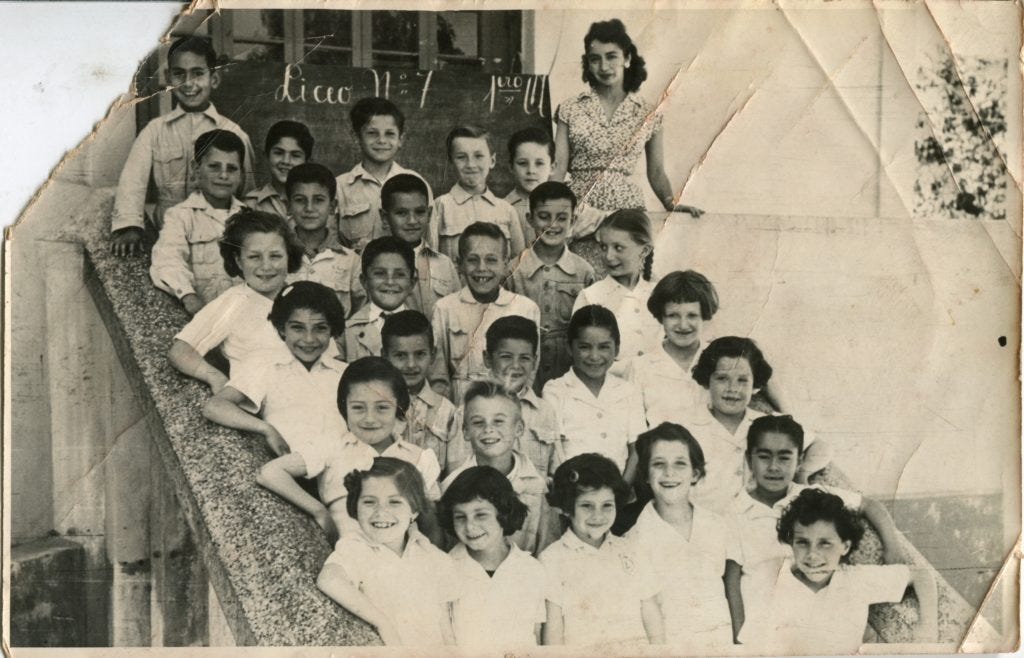
There is a further paradox, too: frontier can simultaneously divide and create cohesion. It can separate one group from another and, under certain circumstances, strengthen a broader sense of we. It can make an internal identity temporarily less significant in order to reinforce a shared belonging. And when circumstances change, what seemed to have receded can become visible once again.
Borders, then, do not merely organize space. They organize attention and determine which differences we see first, which memories we consider central, and which forms of belonging take priority.
The demographic asymmetry between Chile’s small Jewish community and its much larger Palestinian diaspora makes the local case particularly revealing. The Sephardic community’s own small scale makes certain mechanisms easier to see—mechanisms that may be less immediately visible in larger communities.
What can be observed in Santiago may therefore help illuminate what takes different forms in Brooklyn, Sarcelles, Haifa, or Buenos Aires. No one entirely chooses the borders they inherit. Yet at some point, everyone decides what to do with them.
We cross, contest, and redraw them.
In doing so, we decide which of our memories to make thicker and which to allow to grow thin. Perhaps that is one of the fundamental paradoxes of diasporic life: we do not merely live within the borders we inherit. We also live within the decisions we make about them.
Every time those decisions are renewed, the map changes and the frontier outside moves the border within.